Skip to content

admin

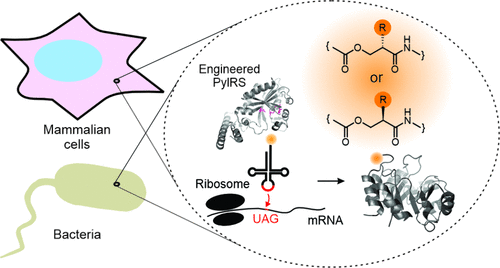
Co-Translational Incorporation of (R)- and (S)-β2-Hydroxyacids In Vivo: Directed Evolution of Efficient Aminoacyl-tRNA Synthetases (J Am Chem Soc, 2026)


By Chintan Soni Proteins are powerful and versatile molecules with immense potential in medicine and the materials industry, but they are built from just 20 natural α-amino acids, linked through an α- amide backbone, limiting the range diversity of structures and functions they can achieve.… Read More »Co-Translational Incorporation of (R)- and (S)-β2-Hydroxyacids In Vivo: Directed Evolution of Efficient Aminoacyl-tRNA Synthetases (J Am Chem Soc, 2026)
NSF C-GEM brings polymer science to the Cambridge Science Carnival

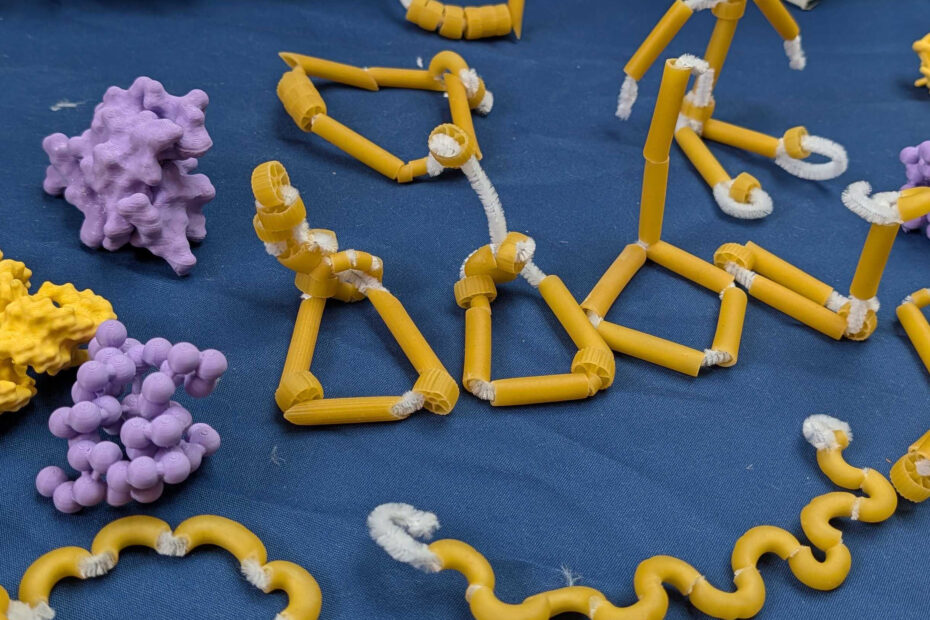
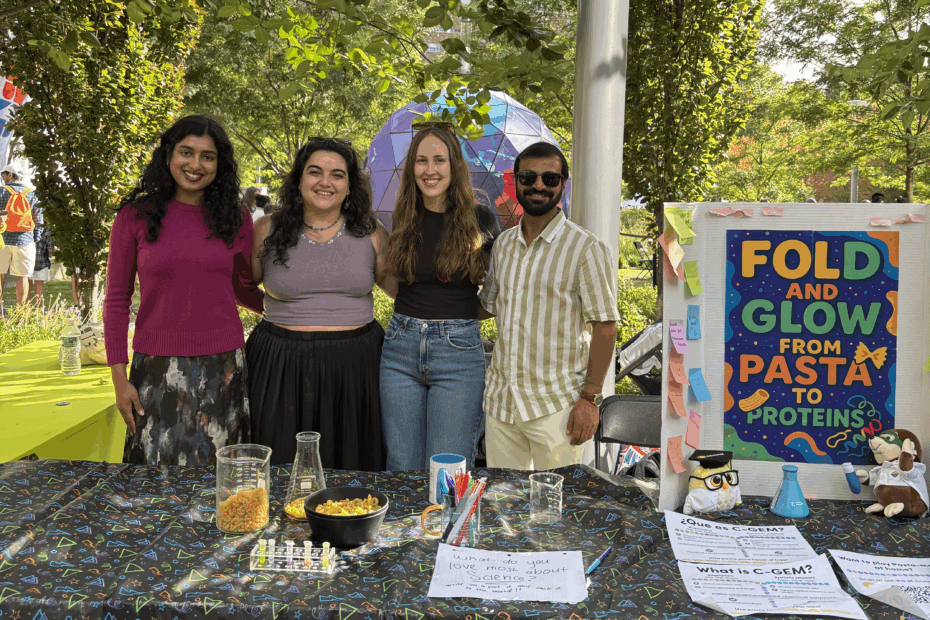
On Sunday, C-GEM participated in the Cambridge Science Carnival at the Kendall/MIT Open Space. The Cambridge Science Carnival is an annual, family-friendly science extravaganza, featuring over 100 STEAM activities, including C-GEM’s “Pasta-mers” activity with a fluorescent flourish. C-GEM scientists taught the science of biopolymers to… Read More »NSF C-GEM brings polymer science to the Cambridge Science Carnival

Chemical and ribosomal synthesis of atropisomeric and macrocyclic peptides with embedded quinolines (Nat Chem, 2025)

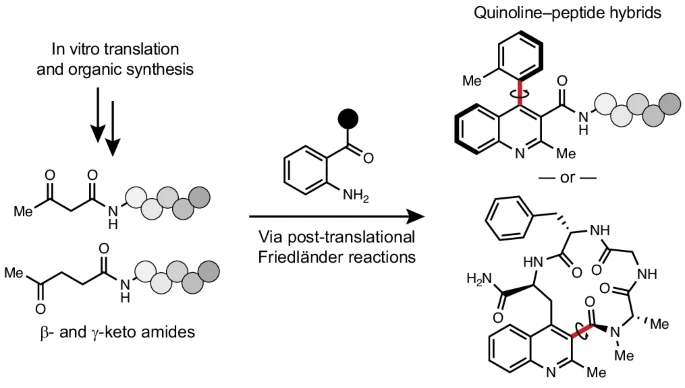
Most scientists have a complex love/hate relationship with peptides, especially in the field of drug discovery. Peptides are encodable, for sure, but they are also structurally featureless and often display exceptionally poor bioavailability and cell permeability. In this work, C-GEM researchers developed chemistry with the… Read More »Chemical and ribosomal synthesis of atropisomeric and macrocyclic peptides with embedded quinolines (Nat Chem, 2025)

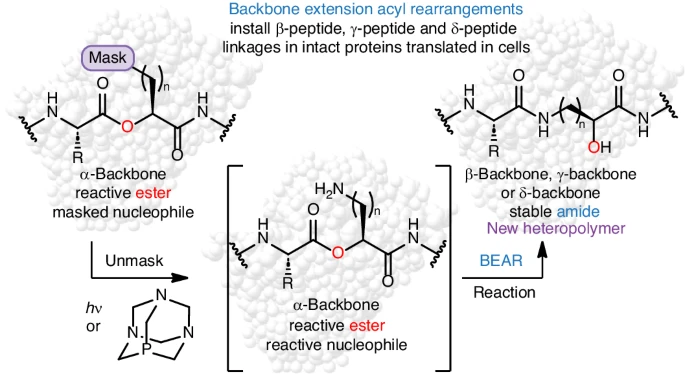
Site-selective protein editing by backbone extension acyl rearrangements (Nat Chem Biol, 2025)

Researchers at the NSF Center for Genetically Encoded Materials (C-GEM) developed a novel and versatile chemo-ribosomal strategy to generate isolable quantities of protein-derived biopolymers containing site-specific backbone modifications. This strategy relies on an intramolecular backbone-extension acyl rearrangement (BEAR) reaction that post-translationally and site-specifically rearranges the… Read More »Site-selective protein editing by backbone extension acyl rearrangements (Nat Chem Biol, 2025)

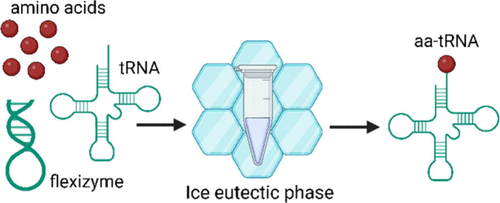
High Yield, Low Magnesium Flexizyme Reactions in a Water-Ice Eutectic Phase (Biochemistry 2025)

By Joshua Davisson Better Flexizyme reactions! This paper describes a method to improve the yields of flexizyme-promoted tRNA aminoacylation in vitro. Inspired by possible origins of life reaction conditions, performing flexizyme reactions in an ice eutectic phase reduces some of the critical disadvantages of flexizyme… Read More »High Yield, Low Magnesium Flexizyme Reactions in a Water-Ice Eutectic Phase (Biochemistry 2025)